

What to do after an FASD diagnosis
 Roger Zoorob, MD, MPH, FAAFP
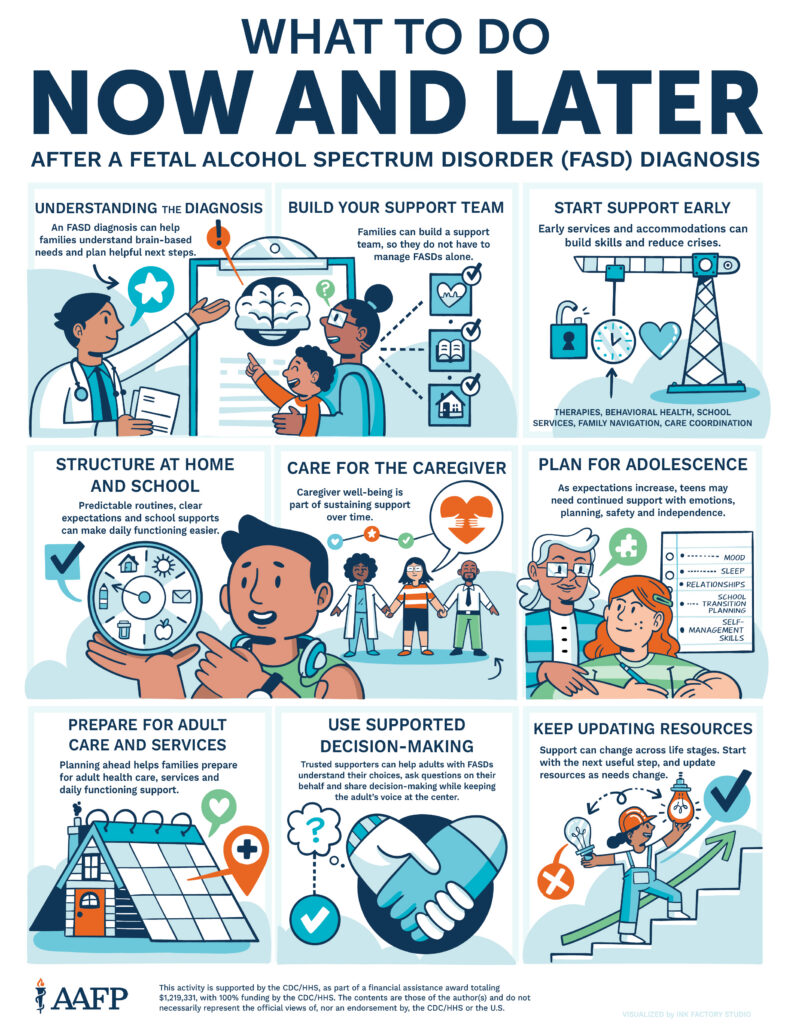
An FASD diagnosis can bring about feelings of uncertainty and worry, but also a sense of relief that you have a diagnosis and a direction about what to do next. That diagnosis often leads caregivers to a support network that can make daily functioning for patients with an FASD easier, helping them manage their home and school lives and provide a path to navigate work, the health care system and eventually a more independent adulthood.
Every person with an FASD is different. Patients with FASDs may need help learning and managing emotions, behaviors, sleep, communication, daily routines, friendships, safety, appointments and work. With the proper support, individuals with FASDs can build skills, strengthen relationships and participate more fully in life.
FASD in childhood
1. Understand the diagnosis
FASDs affect how the brain develops and works. This can affect memory, emotions, impulse control, judgment, communication and the ability to meet expectations that may seem typical for the person’s age. Some people also have medical, developmental or behavioral health needs that require additional support. A diagnosis can help families and care teams move from questions such as “why can’t my child do this?” or “why do they act this way?” to “what support(s) can I receive to help them succeed in life?”
2. Build your support team
You do not have to manage FASDs alone. Your family physician can help connect your family with health care services, school partners, care coordination services and trusted professionals who can support daily life. The services and team of professionals who help support patients with FASDs may change over time, but they will likely include:
- Primary care and behavioral health specialists and medication management services as needed.
- Therapists, teachers and school administrators, individualized education plan (IEP)/Section 504 plan team members and transition coordinators.
- Specialists for sleep, hearing, vision, seizures, feeding, growth and other medical concerns.
- Care coordinators, community health workers, social workers, family navigators, peer mentors and disability service organizations.
- Trusted family members, friends, mentors and community supports who help outside of appointments.
3. Start supports early
Support can begin even while you are still learning about the diagnosis. You do not need to wait until things become a crisis. Ask your family physician which referrals should be made first, and the care team can check whether the following supports are working:
- Behavioral therapy, parent/caregiver coaching and mental health care.
- Speech therapy, occupational therapy and other indicated therapies.
- School services, accommodations, care coordination or family navigation assistance.
4. Connect school supports with home routines
Ask the school about evaluation for an IEP or Section 504 plan. It also helps when school strategies and home routines use the same kinds of supports, including1:
- Short, clear instructions; visual reminders and schedules; extra time to accomplish tasks; repetition and reminders.
- Breaks between tasks; sensory tools and behavioral supports focused on prevention; help with transitions between activities.
- Regular communication between the school and caregivers with reasonable expectations for the student.
5. Create structure at home
Predictable routines and simple communication at home can reduce daily frustration, including:
- Keep routines simple and consistent with clear expectations and repeated practices.
- Use visual lists, reminders, calendars and/or picture schedules.
- Give one instruction at a time and repeat skills often.
- Calm responses work better than punishment or long explanations.
- Praise effort and progress.
- Observe when hunger, fatigue, noise, transitions or stress make things harder.
FASD in adolescence
FASDs do not disappear with age but needs often shift across life stages. As your child ages, their needs will change. Supports that help in childhood may need to be updated during adolescence and again in adulthood.
The teenage years can bring new challenges. Teens with FASDs may want more independence but still need help with planning, decision-making, emotional regulation, risk recognition and follow-through. As changes begin to occur, the following tips can help during that transition:
- Keep regular visits with your family physician and care team so new concerns are noticed early.
- Use patient visits to talk about mood, sleep, behavior, friendships, relationships, substance use, sexuality, online safety and other safety concerns.
- As school and social expectations increase, update supports such as IEP or Section 504 plan goals, classroom strategies, transition planning, and preparation for work or other adult activities.
- Begin practicing small self-management skills with support, such as answering questions during a visit, using a reminder system or learning a medication routine.
- Use early skills to talk about future goals, including school, work, daily living, transportation, relationships and community support.
- Start adult health care planning early so records, providers, privacy questions and support roles are not handled only when care is changing.
FASD in adulthood
Moving from child-centered care to adult care can be challenging because services may change. Helping the next care team understand the diagnosis, successes, challenges and the supports still needed can be achieved with the following planning:
- Identify an adult primary care doctor early.
- Keep records organized, including diagnosis, evaluations, medications, school plans and successful strategies.
- Ask for a medical and functional summary before changing care teams.
- Ask what changes are needed when the person turns 18, including privacy, consent and who can help with appointments.
- Connect with adult services before child-focused services end.
As people with FASDs transition to adulthood, they continue to benefit from the following supports in their daily lives from family members, caregivers and support people with permissions:
- Primary care and behavioral health care specialists.
- Medication management assistance when needed.
- Employment or vocational assistance, job coaching and workplace accommodations.
- Transportation planning, housing access, daily living supports and community programs.
- Appointment and financial planning, and benefits and other paperwork.
Needing support as an adult is common and does not mean someone has failed. The goal is to find the right combination of supports that helps people with FASDs live safely, participate meaningfully and pursue personal goals.
Understanding supported decision-making
As your child gets closer to adulthood, you may wonder who can help with health care decisions, appointments, privacy forms, money, transportation and safety. Adulthood does not have to mean facing everything alone.
Supported decision-making allows adults to receive help from trusted supporters while continuing to participate in decisions about their own lives. Many adults with FASDs can successfully make decisions and take actions when the following information is provided clearly and support is available:
- Explain medical information in simpler terms.
- Attend appointments and take notes.
- Organize paperwork, calendars, medications and reminders.
- Review options before making a decision.
- Complete benefits applications and understand financial obligations.
- Communicate the person’s preferences to providers.
Before the person with an FASD turns 18, families may want to discuss privacy forms, release-of-information documents, health care proxies, financial plans, living arrangements, transportation, and employment and community programs. Some people only need informal support, while others may need more formal arrangements. Legal advice may be needed when considering powers of attorney, representative payee arrangements, and limited guardianship or full guardianship arrangements.
Caring for yourself while caring for someone with a FASD
Caring for someone with an FASD can be meaningful and rewarding, but it can also be exhausting. Many caregivers spend significant time coordinating appointments, advocating for services, solving problems and helping their loved one navigate daily life. Taking care of yourself is not selfish; it is part of sustaining your support over time. Try incorporating the following mindsets and actions into your routine1,4,5:
- When challenges arise, remind yourself that many issues are brain-based. This mindset can reduce blame and make it easier to focus on what support might help.
- Celebrate small successes. Progress may happen in small steps and may require extra repetition.
- Ask for help early from family support groups, peer mentors, care coordinators, community health workers, school teams and behavioral health professionals.
- Make time for your own health appointments, sleep, counseling, supportive relationships and short recovery breaks when possible.
- Use respite or backup care if available. Even brief breaks can help caregivers stay steady and responsive.
You do not have to figure out everything at once. Start with the next useful step, keep doing what works and update supports as needs change.
ADVERTISEMENT
ADVERTISEMENT
Explore More